

About Me
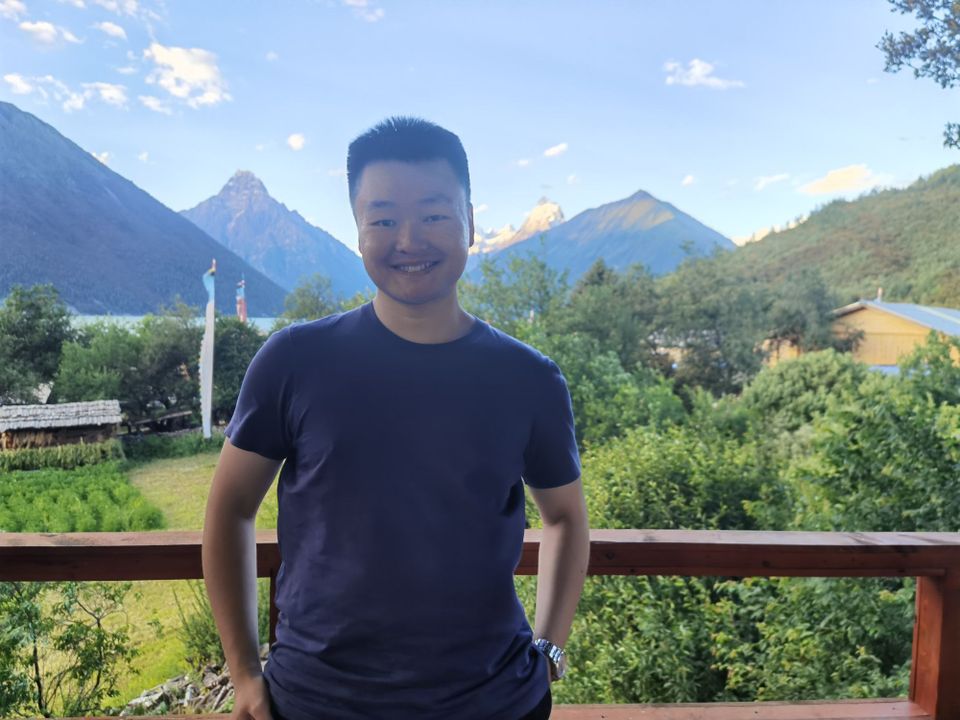
I've been teaching for over a decade and currently teach economics at one of the best high schools in China.
I lead a small department of humanities teachers, and my goal is to help them excel. I studied, accounting, finance, secondary education and educational technology, and have a degree in all those fields.
I am a husband first, father second, son third, and then everything else.
That said, I am deeply committed to helping my students design their dream lives.
This not a traditional blog with a newsletter where an authority figure is teaching something. I do not claim to be an authority.
Instead, this is an AI-assisted learning platform for me. I have a ton of questions around AI, educational leadership, and teaching (among other things) that I want to tackle.
My newsletter explores those questions and allows me to learn in public.
To do so, I've employed agentic workflows that will help with research, intellectual discourse, planning and more. I figured that putting words out on the Internet will incentivize me to stand behind those words. That process will help me learn whichever topic I am tackling.
So if you subscribe, we'll be learning together.
Other stuff:
I like reading about entrepreneurship, behavioral psychology, and personal finance.
I do factor investing with index funds because I've made enough mistakes in other ventures.
I hold a business degree in accounting and finance.
I really like good food (who doesn't?)
Feel free to reach out to me at leonandlife@gmail.com
This is also a good place to disclose my AI usage. My workflow for creating these newsletters are below, as summarized by Claude which manages the whole flow.
AI Use Disclosure — AI in Schools Newsletter
This whole website attempts to answer an underlying question: can AI be used as a partner (not the leader or orchestrator) to produce better work than if I had worked alone? As such, I use AI as a co-author and production partner in creating this newsletter. I think transparency about that is part of practising what I preach. Here's exactly how it works.
Where AI does the heavy lifting
Research pass. Once I've agreed on an angle for an issue, AI runs web searches and produces an annotated bibliography — typically 8–10 candidate sources, each summarised with a credibility verdict and key caveats. This saves me hours of legwork I'd otherwise do manually. I tend to get it to follow up with more research on different viewpoints.
Drafting. After I've curated and scrutinized which sources to use, provided my own takes and experiences, and signed off on an outline, AI writes a full first draft while referencing a file trained on my writing style. An AI editor then reviews it for voice and consistency before I see it. The key is that I already know the arguments it will make before this process.
Social repurposing. After a newsletter is published, AI drafts the LinkedIn posts and Twitter/X threads drawn from that issue. I manually edit each one.
Where I stay in the loop — every time, no exceptions
The idea and the argument are mine. Every issue starts with a problem, observation, or take I bring to the process. AI can offer framings, but it cannot invent the topic. If I don't supply an idea, the process stops.
Source curation. I personally review every source in the bibliography and label each one: anchor, supporting, or discard. AI cannot use a source I've discarded, and it flags any source curation call where it would have decided differently so I can reconsider. The bibliography always includes at least one source that complicates my thesis.
The practitioner layer. Any section that draws on my classroom or department experience (a real moment, a specific observation, something I've actually tried) must come from words I provide in that session. AI is explicitly not allowed to invent or infer this layer. If I haven't supplied it, that section is cut.
Outline sign-off. Before any drafting begins, I review and mark up the proposed structure and iterate until I'd put my name to it as an outline.
Whole-draft review. I read the full draft, give feedback, and the whole piece is revised in response. There are no sections I approve in chunks. This loop repeats until I approve the complete essay. Then I do a manual edit.
Per-item social approval. Every LinkedIn post and Twitter/X thread is reviewed individually. Nothing is batch-approved or posted without my explicit action on that specific item.
What this means in practice
The research and drafting are AI-assisted. The ideas, the source judgements, the practitioner anecdotes, the outline decisions, and the final approval at every stage are mine. If something is published under my name, I have read it in full and chosen to send it.